| During my childhood
years on the family’s sheep ranch, it wasn't unusual
to camp for weeks, or even
entire summers at a time in the isolated deserts and
mountains of Idaho. Due to the distance that needed
to be covered every day over roadless terrain, the horse
was the only logical choice of transportation. I was
intriqued right away with the recreational possibilities
a pack horse could provide. No way was dad going to
relinquish the duties of a work horse for "play"
though. Being stubbornly independent, that was fine
by me and I began experimenting with backpacking. At
the age of twelve, I did my first human-powered overnighter,
alone. I was high as a kite with this newfound self-reliance.
However, with the pack dwarfing my small frame, I barely
made it two miles from where my mother had dropped me
off. The prepubertal ignorance in me packed the type
of gear you’d expect to see on top of a rented
SUV in Yellowstone. It was a comedy of packing errors,
but a great experience… and one that lead to my
current line of thinking on travel: Comfort
and enjoyment come more from the ability to move freely
than it does from habitual conveniences.
Careful
to not fall prey to the clever marketing consumer
trap. Purchasing needless gadgets just
contributes to the worlds problems, weighs us down,
creates bulk,
and costs us money. KISS: Keep
It Super Simple |
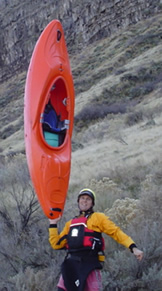 |
| A boat loaded
with all the creature comforts does not have to
be heavy. |
Having a compact and light load
means many things. First of all, packing and unpacking
the boat becomes nearly effortless. Secondly, it makes
for easier, faster, and safer carrying on portages and/or
hike-ins. Lastly, regardless of boat, it will be faster,
more responsive, and just generally easier to paddle.
Lightness is just as good psychologically as well. It
frees the mind fostering confidence and attentiveness.
How light? The
extent you take this depends on your self-support skills,
the nature of the trip, and the amount of homework you're
willing to put forth. However, as long as you aren't
trading comfort for weight savings, the lighter your
boat is, the easier everything will be. And the more
you are pushing your paddling and physical limits, the
more you should be thinking about this. There are few
if any sports where lighter doesn’t mean more
performance. Kayaking is no different. So, other than
giving your buddies an excuse to razz you, you have
absolutely nothing to lose by saving every last bit
of weight you can. And, if you
play your cards right, you’ll have a whole lot
to gain...including the satisfaction
of seeing the banter quickly turn in to curious inspections
then serious questions after your buddies feel
how light your boat is. At that point
though, the most forthright can turn sneaky. Watch these
envious souls closely for they'll slip any number of
ballasted items in your stern to make it "more
fair" as they say. Mine used to attract rocks...
or beer that was quickly retrieved by the hand of the
guilty once to camp.
Ok, but doesn't going extra
light mean I'll be cold, hungry and just plain miserable?
No, not at all. By keeping things simple, having good
gear, and throwing in a little creativity and some pre-trip
food planning, it is possible to live more comfortably
at camp than others carrying twice the weight (see
gear list for examples).
And you will certainly be burdened less while shouldering
and paddling your boat. So, the question becomes this:
Why carry extra weight if you don't have to?
|