 |
|
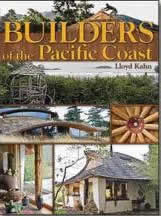
Builders
of the Pacific Coast, Home
Work: Handbuilt Shelter, and Tiny
Homes: Simple Shelter by Lloyd Kahn I know of no other set of books so universally loved. All three are artfully packed with photos and stories of some of the most cleverly crafted homes ever published. Llyod Kahn is arguably the most inspirational author in the home genre. Please see more about these books below in Alternative Building Inspiration.
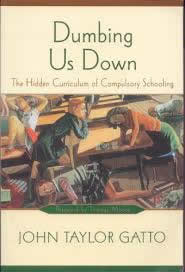
Dumbing Us Down: The Hidden Curriculum
of Compulsory Schooling
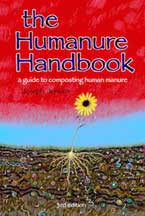
by John Taylor Gatto John Taylor Gatto was named, for his second time, "New York City Teacher of the Year" in 1990. During his acceptance speech, he spoke out against the public education system. Rather than getting railroaded, he was again named "New York City Teacher of the Year" the following year then "New York State Teacher of the Year". Climaxing with that, he stopped teaching, believing he was harming children. This lead to being the subject of a show at Carnegie Hall which launched his award winning career of writing and public speaking in the area of school reform. Many who speak against such models of conformity experience alienation. Not Gatto...and his success says a lot about his message.... and way of conveying it. Dumbing Us Down is a superb read for anyone with an interest in public ed .....or those who have ever questioned, even if slightly, the very system that is America. Highly recommended! The Humanure Handbook:
A Guide to Composting Human Manure 3rd edition by
Joseph Jenkins With “human manure” in the title and chapters such as “Crap Happens” and “A Day in the Life of a Turd”, you might wonder what kind of crackpot this Jenkins guy is. However, upon closer inspection, one will realize this book is not only an award winner but also an Amazon.com bestseller and three-time award finalist. Additionally, the US Dept of Health and Human Services praised it and asked for more information and the US Environmental Protection Agency ordered copies and nominated it for an environmental award. There is a reason for all this: This book is brilliant! Jenkins blends humor with considerable research and 30 years real-life experience into a fun to read book that goes well beyond that of human excrement. Whether or not one has any intention of safely recycling their poo, this book should be considered a must read for anyone with an interest in the environment and or sustainable lifestyles. Actually, some feel this book should be a mandatory read for every high school student. The message is poignant and it would certainly put the "fun" back in to learning. Additional information can be found here on Jenkin’s website. Our Stolen Future
by Theo Colborn, Dianne Dumanoski and John Peterson Myers Many assume products containing chemicals would not be on store shelves if they were not proven “safe”. This book shatters those assumptions by bringing to light scientific discoveries that expose the enormity of the ramifications common and everyday products have on embryogenesis, children and ultimately, our future. Though unnerving, this is undoubtedly one of the most important to read books of our time. Put together by the all-star cast of the late Dr. Theo Colborn, whom was an award winning senior scientist with the World Wildlife Fund and one of the world's leading authorities on endocrine disrupting chemicals whose work is largely credited for the paradigm shift in how scientists are viewing toxins; Dianne Dumanoski, a recipient of the prestigious Knight Fellowship in Science Journalism; and Dr. John Peterson Myers, CEO and Chief Scientist at Environmental Health Sciences. A synopsis and excerpts, along with updated scientific findings, can be found at Our Stolen Future’s website. An excellent PBS interview with Theo Colborn, can be found here.
A uniquely beautiful book, both in appearance and content, A Handmade Life is philosophical in nature yet practical in many ways. Mixed amongst the easy-to-read writings are unobtrusive instructions for simple handmade items from Eskimo-inspired knifes to bread and children’s toys. Philosophically, the content covers areas such as the beauty of quality and practicality; the importance of manual work; what William refers to as a “forced” education system which fails to nurture individual creativity; and the value of simplicity. The Nautilus Book Award the late Mr. Coperthwaite received for this book was well deserved. A New Earth: Awakening to Your Life's
Purpose by Eckhart Tolle Please see this book's description/review below in Personal Health.
The Good House Book: A Common-Sense Guide to Alternative Homebuilding by Clarke Snell This is a super good primer for those wanting to familiarize themselves with the differences between conventional and alternative building concepts, materials and approaches. The Good House Book has an easily understood writing style and one to eight color pictures and or illustrations on nearly every one if its 240 pages, clearly comparing alternative to conventional in practically every facet of the building process. To top it off, there are six sizable accounts from people who have built their own alternative homes, sharing their experiences good and bad. The Art of Natural Building, Second Edition by Joseph F. Kennedy, Michael Smith, and Catherine Wanek The expanded second edition is a superb anthology of articles from leaders in the natural building movement covering everything from the philosophical side to the practical application of design and materials using varying methods. While similar in idea to The Good House Book above, this introductory book focuses entirely on natural materials and contains heaps of resources and some very helpful articles with architectural details. Building Green: A Complete How-To Guide to Alternative Building Methods by Clarke Snell & Tim Callahan Clarke and Tim build a small building using an array of alternative methods/materials and document the entire process from concept to completion. Easy to read and lavishly loaded with color pictures and illustrations, this step by step how-to guide is for those wanting to build an alternative home yet aren’t sure where to start and how. Strawbale, cob, living roofs, earthen plaster, cordwood, solar orientation and more, this book is both inspiring and confidence boosting. Supplement it with specialty books, i.e., if you want to build a strawbale home, complement it with those books for additional detail info. The Hand-Sculpted House: A Philosophical and Practical Guide to Building a Cob Cottage by Ianto Evans, Michael G. Smith & Linda Smiley Though some might consider cob the fringe of alternative building materials, it is dirt-cheap (nearly free) and as shown in this book, one can build a beautifully unique cottage with it. But there's more to this book than building with cob. Learning to use the sun for heating is greatly simplified and the philosophical section excellent, driving home the value of not having a mortgage. Design of Straw Bale Buildings: The State of the Art by Bruce King Comfort in Any Climate by Michael Reynolds Long time pioneer in "sustainable" home design and construction, Michael Reynolds presents, in a very easy to understand manner, basic design principles for utilizing the sun and earth for natural home heating and cooling.... in any climate. It contains many quality hand-drawn illustrations and a few color photographs. A good book for the laymen who has wondered about using the sun and earth to their advantage. Earthship Volumes I, II and III by Michael Reynolds Earthbag Building: The Tools, Tricks and Techniques by Kaki Hunter & Donald Kiffmeyer and Building with Earth: A Guide to Flexible-Form Earthbag Construction by Paulina Wojciechowska These are both very good books on a unique building technique. The former is more comprehensive but the latter does have a few differing and excellent illustrations on varying details. The Natural Plaster Book: Earth, Lime and Gypsum Plasters for Natural Homes by Cedar Rose Guelberth & Dan Chiras While all of the above books have good information on natural finishes, this book goes into much more detail and especially so with, you guessed it, natural plasters. A good reference for anyone building a home with natural materials. Using Natural Finishes: A Step-by-Step Guide by Adam Weismann & Katy Bryce This is the most up to date book on the subject of natural plasters. Thorough with an abundance of quality color photos and descriptions of traditional techniques used around the world. Easy to reference from and a joy to thumb through, this is a five star book! The Natural Paint Book by Lynn Edwards & Julia Lawless Natural Solar Architecture: A Passive Primer by David Wright Though much has been learned about solar since 1978 (published date), this book's information is still relevant and the excellent hand drawn illustrations and simple writing make it easy to understand. It also contains some clever ideas and is unique due to being entirely hand written, architectural style. It’s a useful read but perhaps of particular interest to book collectors for its novelty. (If possible, get the "revised edition".) Rocket Mass Heaters: Superefficient Woodstoves You Can Build by Ianto Evans and Leslie Jackson For the habitual tinkerer interested in building a novel yet inexpensive and environmentally friendly wood heater few have heard of and fewer have seen, this is the book. Though small, it has just enough illustrations and pictures to make the instructions easy to follow and will arm you with the information needed to design in varying contexts. A warning though. Although Ianto has decades of experience designing stoves, and has used this style since the late 80's, he makes it clear these heaters are still in the experimental stage. If that stokes your fire, grab this book and get started. Real Goods Solar Living Source Book: Your Complete Guide to Renewable Energy Technologies and Sustainable Living by John Schaeffer Reference manual and catalog in one, this book is huge in content and a must have for anyone interested in alternative building and renewable energy. Design concepts, products, diagrams, charts and much more, this book, quite literally, has it all. A tremendous resource! (Make sure you get the latest edition.) Build Your Own Earth Oven, 3rd Edition by Kiko Denzer & Hannah Field Dig Your Hands in the Dirt: A Manual For Making Art Out of Earth by Kiko Denzer A simple book on a medium rarely used. Great ideas for all age groups and school projects. The New Natural House Book: Creating a Healthy, Harmonious, and Ecologically Sound Home by David Pearson The Barefoot Architect, A Handbook for Green Building by Johan van Lengen A unique book for anyone interested in eco-conscious dwellings, including small community designers. The content is basic but thorough including all facets of design and construction for tropic and termperate climates alike. Setting it apart from other books on the subject is the instructions it contains for making various low tech construction tools in addition to many other necessities that make a home complete. This includes a variety of water heaters, windmills, solar food dryers, stoves, water pumps, filters, cisterns, distillers, refrigerators, a grain mill, irrigation and sanitation methods and much more. This breadth of information, which is primarily graphic with simple illustrations and instructions, serves not only those uninitiated to low-impact design and construction, but is a goldmine of idea sparkers for the deft handyman. There is little wonder that more than 200,000 copies of this book have been sold in Latin America. With the recently released English translated version, it is sure to sell many more. Earthen Floors: A Modern Approach to an Ancient Practice by Sukita Reay Crimmel & James Thomson Imagine a stunningly beautiful floor that is ecologically sound, inexpensive, and makes bare feet think they're walking on thick leather. That is a sealed and waxed "earthen floor". "Earthen Floors: A Modern Approach to an Ancient Practice" is the only book available on the subject and a good one at that! Alternative Building Inspiration Small Strawbale: Natural Homes, Projects & Designs by Bill Steen, Athena Steen, and Wayne Bingham; The Beauty of Straw Bale Homes by Athena Swentzell Steen & Bill Steen; and Strawbale Home Plans by Wayne J. Bingham and Colleen F. Smith All of these books are loaded with beautiful photos and ideas to inspire. The first two, however, contain various chunks of useful information from sawdust toilets to natural finish recipes. The latter doesn’t contain “plans” in the technical sense but does have conceptual floor plans, general specs and the owner/builders story with each home featured. Journey by Michael Reynolds Little House on a Small Planet by Shay Salomon Home Work: Handbuilt Shelter by Lloyd Kahn This is a super fun book containing around 1500 photos of some seriously funky and whimsical homes and various other owner-built shelters from the U.S. and abroad. It’s artfully put together, informative and a compendium of creativity and handcraftsmanship at its finest. With a scrap-book type layout and interesting stories throughout, this book is good enough to hold the interest of most anyone. Further words cannot do this one justice. Builders of the Pacific Coast by Lloyd Kahn Every bit as good as Lloyd's Home Work above, this book is nearly identical in size, layout and quantity of photos. The homes are all new though with a jaw-dropping display of ingenuity and craftsmanship from various builders on the Pacific coast. No one puts together a book like Lloyd Kahn! Tiny Homes: Simple Shelter by Lloyd Kahn Lloyd does it again! Same size, layout, artfulness, and general feel as above two books but with a subject matter of tiny homes. Another winner! Water Storage: Tanks, Cisterns, Aquifers, and Ponds for Domestic Supply, Fire and Emergency Use by Art Ludwig A no frills book with tons of to-the-point information. The New Create an Oasis With Greywater: Choosing, Building and Using Greywater Systms by Art Ludwig In typical Ludwig fashion, this is a no-frills book brimming with valuble information. Radically different than the fluffy, maintenance ridden, and expensive systems seen advertised in glossy magazines, here you'll find simple, practical, inexpensive and proven greywater systems. This is the consummate guide. Builder's Greywater Guide: Installation of Greywater Systems in New Construction & Remodeling by Art Ludwig Useful for those building in areas with heavily enforced codes. Rainwater Harvesting for Drylands and Beyond Vol 1 & 2 by Brad Lancaster With a combined 570+ pages, these books go far beyond the notion of collecting water from the roofs of buildings and storing it in barrels. These books take the reader from understanding the principals and benefits of rainwater to the hydrologic cycles and watersheds to ways of utilization and conceptulizing a design using the simplest of methods. There's good amounts of information on the use of drains, basins, mulching, planting and plant care, small earthworks and greywater. Brad also clearly explains the integrative design approach and how one can make their house and landscape work together for greatest benefits. In summary, whether you have a low output well or just like the idea of using less municipal or well water while having a landscape that not only provides food but acts as a living air conditioner for your house, put both these books in your reference library. Solar Water Heating: A Comprehensive Guide to Solar Water And Space Heating Systems by Bob Ramlow & Benjamin Nusz Water From The Sky by Michael Reynolds With more than 30 years of experimentations under his belt, Michael Reynolds has come up with some unique and effective ways to capture, store and use rainwater within the home. For those in the design stages of building a new home, this book contains ideas on the points of roof configuration and materials, cisterns and distribution as well as greywater reuse. While these principles can be utilized in any context, they were intended for those who have no municiple or well water. The Homeowner's Guide to Renewable Energy: Achieving Energy Independence Through Solar, Wind, Biomass And Hydropower by Daniel D. Chiras A good primer for those wanting to familiarize themselves with renewable energy sources. Lots of good basic energy saving tips as well. Microhydro: Clean Power from Water by Scott Davis Let My People Go Surfing: The Education of a Reluctant Businessman by Yvon Chouinard Patagonia owner, Yvon Chouinard, has presented a great benchmark for the business owner wishing to thrive with the least amount of social and environmental impact. This book is also thought provoking on the level of personal values. Fitting for a wide audience but perhaps most appropriate for MBA programs. Every MBA hopeful should read it. Radical Simplicity: Small Footprints on a Finite Earth by Jim Merkel The Newman's Own Organics Guide to a Good Life: Simple Measures That Benefit You and the Place You Live by Nell Newman Organic Living in 10 Simple Lessons by Karen Sullivan Complete Idiot's Guide to Simple Living by Georgene Lockwood & Carol Abel The Blue Zone by Dan Buettner With the plethora of nutrition and lifestyle books inundating today's book store shelves, "health" can seem overwhelmingly complicated. This is especially true when many are contradictory yet written by experts, many of which claim to hold "the" secret for a long and healthy life. Buettner does't cite a few recent studies or offer many theories. Instead, he provides living proof...from people that not only lived a century, but did so with none of the diseases so prevalent today....and lived high quality lives to their last days. The Blue Zone is about these people's time tested diets and lifestyles...a book originating from a National Geographic assignment where Buettner and a team of longevity experts searched the planet for pockets of concentrated centenarians to study. While some of what they found was of little surprise, there are common threads these varying people shared that would open the eyes of many, relieving them of the notion that complicated diets and gym memberships are needed for health. The best news is that these common threads can easily be emulated by us adding not only years to our lives, but life to our years. Explain Pain by David Butler and Dr. Lorimer Moseley Have an injury that seems to linger, or not heal as expected/hoped? If you can find a copy, "Explain Pain" is well worth the read! Evidence based, this book is designed for students, therapists, and patients alike. Easy to read. Easy to understand. Healing with Whole Foods: Asian Traditions and Modern Nutrition by Paul Pitchford How to Eat by Thich Nhat Hanh Written by a revered zen master, this is a great little book on mindful eating. A collection of mostly one page paragraphs, it's as easy and pleasant to read as any book could be, benefitting anyone interested in health. Fast Food Nation by Eric Schlosser Though written in 2001, this book continues to be a "best seller" as its content is every bit as relevant now as it was then. Eric Schlosser could have taken the obvious easy shots with fast food. Instead, he peeled the layers back to the core pointing out the interconnectedness of everything, reminding us that the food choices we make, fast food or not, shapes the big picture more than any other single thing. Well written and painstakingly researched, this book is fascinating, enlightening, and some times shocking. Consider it a must read. A New Earth: Awakening to Your Life's Purpose by Eckhart Tolle Despite knowing there are devout followers of Christianity who have been able to look beyond that of which Tolle takes a contrarian view, I mention this book after some hesitation. There are areas that will offend some, particularly those of strong religous beliefs. However, I believe the overwhelming majority of this book is of a certain quality that can be of benefit to most any open minded person willing to read it, regardless of religion or belief... and it will resonate with many on levels that may otherwise never be realized. That said, there are some who can not get past the first chapter or two, whether it seems too "out there" or for other reasons. There are many more though who have found this book to be a profoundly enlightening and life changing spiritual manifesto. So, it is here, for as one can not realize total health on proper diet and sufficient movement alone. There must be an equal part of mental and spiritual clarity, and that is where A New Earth comes in. Lao Tzu: Tao Te Ching by Ursula K. Le Guin At the heart of Taoism, this is a beautiful rendition of an ancient text, conveyed through a lifetime of study. The short poetic verses make for easy reading yet its paradoxical essence is elusive while being deeply intuitive (catch that?). Not simply a book to read but rather one to live with, contemplating one verse at a time. Perfect in a distraction free and dimly lit area with a cup of hot tea and crackling fire. Edible & Medicinal Plants of the Rockies by Linda Kershaw and Plants of the Rocky Mountains by Linda Kershaw, Andy MacKinnon & Jim Pojar There is no better way to build a closer understanding and relationship with your surroundings than learning to identify wild plants. And for the Rocky Mountains, you will not find two more user-friendly field guides than these. Botany in a Day: The Patterns Method of Plant Identification by Thomas Elpel Redesigning the American Lawn: A Search for Environmental Harmony, Second Edition by F. Herbert Bormann, Diana Balmori, Gordon T. Geballe and Lisa Vernegaard The Lawn: A History of an American Obsession by Virginia Scott Jenkins American Green: The Obsessive Quest for the Perfect Lawn by Ted Steinberg Four-Season Harvest: Organic Vegetables from Your Home Garden All Year Long by Eliot Coleman In temperate zones, it is practically universal in acceptance that gardening is over by summer’s end without a heated greenhouse. Eliot Coleman defies this logic by harvesting vegetables throughout the cold winter months of Maine using seldom heard of winter-hardy plants, succession planting and cold-frames. Inspired by traditional French gardeners, Coleman shows what can be done for both personal and planetary well being by detaching oneself from conventional thinking. And like icing on the cake, Eliot’s methods are economical and can be simply implemented by anyone desiring to grow their own food. At 42° North latitude in South Central Idaho, I can attest to Coleman's techniques: Freshly picked salad greens all winter long, grown in frames that can be made for $50. The One-Straw Revolution: An Introduction to Natural Farming by Masanobu Fukuoka This classic is a neat little book...and one of the originals of the food movement. Practical yet philosophical...of particular interest for those interested in natural gardening/farming and eastern philosophy. Permaculture: A Designers' Manual by Bill Mollison Some times called the "Permaculturist's bible", this book (written by the late co-creator of permaculture) is the most comprehensive on the subject. It is also the book most permaculture institutions base their curriculum from. Consequently, some find its size and sheer volume of information overwhelming and prefer Mollison’s other book, Introduction to Permaculture…or, The Basics Of Permaculture Design by Ross Mars or, The Permaculture Way: Practical Steps To Create A Self-Sustaining World by Graham Bell. Permaculture: Principles and Pathways Beyond Sustainability by David Holmgren David Holmgren, the other co-creator of the term permaculture, has put out a markedly contrasting book to that of Mollisons. Rather than a get’er done nuts and bolts style with how-to illustrations, Holmgren chose a philosophical route. Holmgren articulately talks about the problems with modern business tactics, the rote education system and the looming energy crisis, or what he calls an “energy descent”. Though different in approach, this is a great compliment to the other books currently available on permaculture and just as important for all its valuable wisdom. For a feel on Holmgren, click here for a video. Gaia's Garden: A Guide to Home-Scale Permaculture, Second Edition by Toby Hemenway There is no doubt this world would be a cleaner and healthier place if more people better understood the ecosystem and its link to their wellbeing and that of future generations. Sure, while the ecosystem as a whole is hugely complex, the basics, with a good book, are easy to learn and serve as a platform to a greater understanding of all things living. Gaia’s Garden teaches these basics then ties them to the home garden and landscape combining Permaculture principals. Delving deeper into those Permaculture principals, this Second Edition is a nice improvement and proves to be an informative and valuable book that a person can reference from long after they learn the basics. Gaia’s Garden is an excellent fit on anyone’s shelf interested in gardening, landscaping and health, both personal and planetary. Find Earthen Exposure on Facebook |
 A
Handmade Life: In Search of Simplicity by William
Coperthwaite
A
Handmade Life: In Search of Simplicity by William
Coperthwaite
|
|